|
In
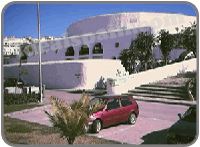
1996 Estepona opened the doors to its new conference and
exhibition centre which caters for up to 300 people. This is
located on the northern side of the town, accessed by the N340
coastal road.
In
the
Misioneros
Square
in
Estepona
is
the
Municipal
Museum
of
Palaeontology
which
presents
a
diverse
collection
of
fossils
from
the
area.
In
total,
the
newly
constructed
museum
holds
36,000
fossils,
20,000
of
which
are
from
Estepona.
Fiestas
When
it
comes
to
festivals
and
fiestas,
Estepona
is
no
different
to
any
other
Spanish
town
and
has
its
fair
share
of
festivities.
The
15th
May
is
the
Fiesta
of
San
Isidro
Labrador
when
the
townsfolk
take
to
the
streets
with
processions
and
during
Easter
(Semana
Santa),
the
street
processions
are
both
beautiful
and
impressive.
One
of
the
biggest
fiestas
is
the
one that takes place in July. The event lasts a whole week and consists of fairs during the day and night. Both fairs give way to the rhythm of the Sevilliana, rumbas and popular Spanish music. The whole town busts into colour, music and passion.
At
midday
the
bars
fill
to
capacity
when
all
manner
of
Andalucian
cuisine
can
be
sampled
including
the
well
known
paella
which
is
traditionally
eaten
in
the
streets.
The
day
fair
continues
until
seven
in
the
evening
when
everyone
rests
in
preparation
for
the
night
fair.
The
town
is
illuminated
at
night
with
thousands
of
light
bulbs
and
the
meeting
points
change
from
the
bars
to
the
outdoor
pavilions
and
the
fairground
rides.
A
children's
paradise
emerges
from
the
darkness
with
rides
of
every
description.
The
smell
of
candyfloss
mingles
with
that
of
cooked
octopus
and
music
emits
from
every
street.
Estepona's
annual
fair
is
repeated
on
the
grand
scale
every
year
and
never
fails
to
attract
thousands
of
visitors
and
satisfies
each
and
every
one
of
them.
The
star
of the
seas
The
evening
of the
16th
July
is a
very
special
time
for
the
residents
of
Estepona
for
this
is the
night
when
the
patron
saint
Virgen
del
Carmen
is
celebrated.
This
is one
of the
most
deeply
rooted
traditions
of
this
fishing
village
and
the
celebrations
begin
with
the
image
of the
Virgin
being
carried
through
the
town,
towards
the
sea.
All
along
the
coast,
the
tiny
fishing
boats,
all
illuminated,
await
her
arrival.
Boats
sounding
their
horns
and
decorated
with
flowers
and
lanterns
receive
the
blessing
of the
Virgin.
Prayers
are
said
for
those
lost
at sea
and
for
the
protection
of
those
that
continue
to
make a
living
from
the
ocean.
The
religious
masses
begin
on the
13th
July
and
continue
each
evening
until
the
16th
with
offerings
of
flowers
and
presentations
of
commemorative
medals.
After
the
blessing
at
sea,
the
Virgin
is
carried
through
the
streets
once
ore to
her
resting
place
in the
chapel
where
the
'Queen
of the
Seas'
watches
over
the
fishing
community.
The
fiesta
comes
to
completion
with a
public
holiday
on the
Monday.
Bandera
Azul
(blue
flag)
beaches
At the
time
of
writing,
the
people
of
Estepona
are
rejoicing
once
again
that
La
Rada
beach
has
been
awarded
blue
flag
status
by the
European
Union.
This
beach
is the
most
honoured
on the
Malaga
coastline
as it
is the
only
one to
be
awarded
this
status
since
the
scheme
was
established.
The
award
was
granted
because
of the
beach's
cleanliness,
safety
factors
and
facilities
provided.
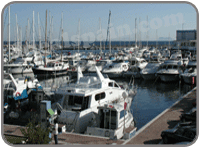
The
port
of
Estepona
has
also,
once
again
been
awarded
status
whilst
some
resorts
on the
coast
have
been
forced
to
take
down
their
blue
flags.
Close
by are
the
villages
of
Sabinillas,
along
the
main
road,
Manilva,
set back into the mountain side and Puerto
de la
Duquesa a wonderful post, just a few minutes away.
Local
attractions
include;
Selwo
safari
Park
- A
great
day
out
for
the
whole
family
and
voted
one of
the
best
in
Spain.
|