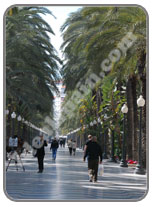
What to see in Alicante
Having such a diverse history, there's no wonder that Alicante has so many historic buildings. Old buildings blend seemlessly with modern constructions and there's something to see on every street.
|
| Among the
churches of Alicante
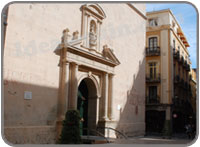
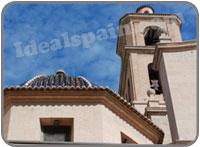
is the Iglesia de
Santa
Maria,
which is
the oldest
church in
the city
and was
built
between
the 14th
and 16th
centuries.
It was
once the
main
mosque
during
Moorish
times. Its
front
comprises
of two
solid
looking
towers and
wonderful
Baroque
stonework.
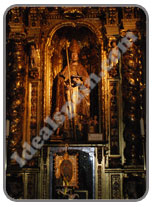
The church
houses
many
important
works of
art. |
|
| The Cathedral
de San
Nicolas was built
between
1616 and
1662 and
stands
over 45
metres
tall. The
Communion
Chapel
inside is
considered
to be one
of the
most
beautiful
examples
of Spanish
Baroque architecture.
St Nicolas
is the patron
saint of
the city
so this
Cathedral
is one of
the most
important
buildings
in the
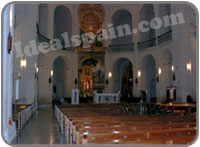
city. Despite its size, the interior is very plain. The huge dome dominates the ceiling. There are small chapels along the aisles. |
|
|
|
| Whilst three sides of the cathedral are in narrow streets, the front door opens onto a small plaza. |
|
| |
|
|
| |
|
The Town Hall and Council Square
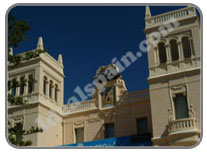
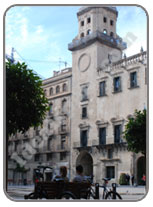
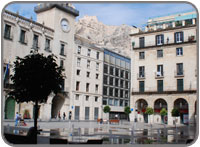
The Plaza de Ayuntamiento, or council square is dominated by the Town Hall with its two square towers and moulded panels. The square has fountains in the centre that appear from nowhere. The Town Hall building is an excellent example of civil Baroque architecture. Work started in 1701 and it took 9 years to build. The doorway is flanked by two wonderful barleytwist columns.
One of the towers has a clock face, the other a matching blank. |
|
| |
|

The Dali statue in the Town Hall Foyer
|
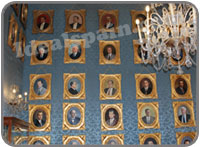
Ex-Mayors of Alicante
|
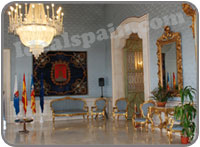
A state room in the Town Hall
|
|
| |
|
|
| |
|
| Scattered
around the
city are
numerous
statues
and
columns
dedicated
to patrons
of the
city. Many
of the
roundabouts
contain a
monument
of some
description.
Museums and art in Alicante
When it
comes to
museums,
Alicante
has its
fair
share. The
Archaeology
Museum,
created in
1932 has
an
extensive
collection
of
artefacts
and is
known to
be one of
the best
in Spain.
The museum
is now
housed in
a new building
and
incorporates
the most
modern of
multimedia
displays. There's also a fine arts museum, museum de Belenes and unique museum of the 'Ninots' from the Falles fiestas. Alicante has a rich history and the museums make an interesting visit. |
|
|
|
|
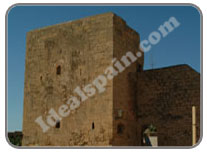
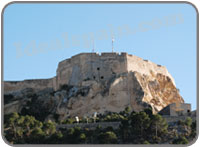
The Castillo
de Santa
Barbara
This is
one of the
largest
medieval
fortresses
in Europe.
It
occupies
the entire
summit and
a large
proportion
of the
slopes of
the
Benacantil
mountain.
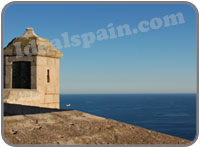
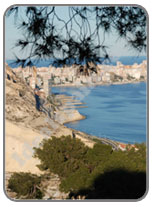
It
commands a
unique
look-out
over the coastline,
the Bay of
Alicante
and the
surrounding
farmland.
Remains
from the
Bronze-age
have been
discovered
on this
site. The
castle has
three
enclosures
of
differing
dates,
each with
unique
features.
The castle
can be
accessed
by a road
leading up
the
western
slope of
the
mountain,
winding
its way
through
pine
trees. |
 |
|
You can drive to the top of the castle although the access road can be hard to find. Signposts are not fantastic. There's free parking at the top of the hill.
Entry to the castle is free of charge and you can easily spend the best part of a day walking round. There's a restaurant near the top.
You can
also visit
the castle
by means
of an
elevator
that
ascends
from the
Paseo
Maritimo.
Entrance
to the
castle is
free but
there is a
charge for
using the
elevator.
EU Senior
citizens
and
disabled
don’t have
to pay. The castle is visible from just about every part of the city. |
|
| |
|
Alicante
also has
an array
of palaces
worth
visiting,
including
the Gavina
Palace which now
houses the
Provincial
Gallery
with fine
paintings
from the
19th
century.
The main
theatre
dates from
1847 and
is a fine
example of
classical construction.
The main avenues in Alicante are lined with Classical and Renaissance buildings. Many of the old apartments blocks have attractive applied reliefs. |
|
| |
|
|
The
bullring in Alicante (Plaza de Toros) is one of
the oldest
in Spain
still in
use. Built
in 1849 it
has since
been
restored
and
enlarged.
The
current
design
dates from
1888 and is rather plain. Inside the bullring there's a small museum of bullfighting and a bullfighting school. The bullring is in Plaza de Espana.
|
|
| |
|
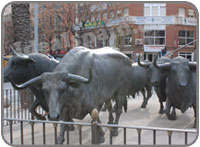
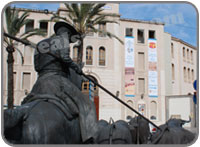
| Outside the bullring there's a wonderful bronze bullfighter and some bulls. |
|
| |
|
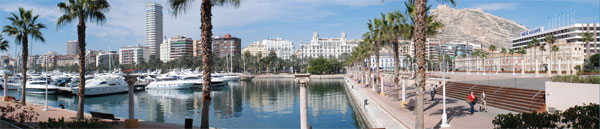
The port and marina in Alicante
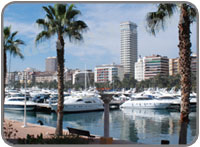
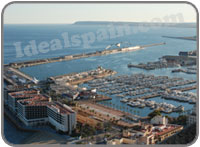
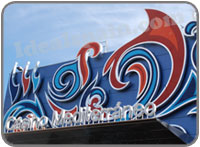
The very modern marina has a host of cafes and restaurants. The further round the marina you walk, the better the view of the city across the water. On the marina you will also find the Casino. The Casino Mediterraneo offers a great nights entertainment from 4pm until 4am (5am in summer). www.casinomediterraneo.es. |
|
| |
|
|
| |
|
The harbour of Alicante
The
harbour
has been
the
strength
of the
city for
centuries,
sending
products
abroad and
bringing
in goods
from all
over the
world. It
was once
the port
of Madrid.
Today,
modern
facilities
combine
with
tradition
and
history to
provide a
thriving
centre. As
well as a
working
fishing
fleet
there are
pleasure
crafts and
passenger
vessels,
nautical
schools
and
sailing
clubs. |
|
Alicante
is a major
education
centre and
has an
impressive
university,
founded in
1979. At
present it
has over
30,000
students
on a
campus
covering
over one
million
square
metres.
The
university
has six
higher
schools,
seven
colleges
and seven
university
institutes.
It has
branches
in several
provincial
towns.
The Monastery
de la
Santa Faz is 5km
from the
city
centre and
is now
used as a
convent of
the order of St
Clare.
Although
being
built in
1752,
there are
remains
here
dating
from 1582
in the
form of a
defence tower. |
| |
|
Parks and gardens in Alicante
Recreation
is the key
word in
Alicante
and to
this end
there are
numerous
parks,
gardens
and plazas
in which
to soak up
the sun
and the
atmosphere.
Most have
impressive
water
features,
monuments
and
statues. Most parks seem to be safe places although they can attract a few vagrants. The oldest park in Alicante is Parque de Canalejas with children's play areas, monuments and lots of shady areas. One of the nicest parks is located a few kilometres from the city. The Parque de El Palmeral has a boating lake, a theatre, play areas and wonderful walkways. |
| |
|
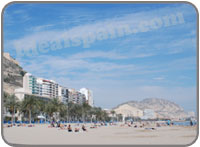
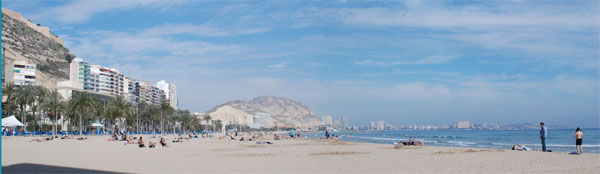
The beaches of Alicante
When it
comes to
beaches,
the Playa
de San
Juan is
considered
to be one
of the
finest in
Spain. A
broad
beach,
some 5km
long that
has all
the
facilities
you would
expect,
from
hotels,
bars,
restaurants
and even
an 18 hole
golf
course.
There are
three
small
coves,
Palmera,
Cantalares
and Judios.
They are
difficult
to access
and
therefore
appropriate
as nudist
beaches.
The small,
sandy
Almadraba
beach and
the well
hidden
Albufereta
beach are
ideal for
water
sports in
safe
surroundings.
Further
south is
the Playa
del Coco,
next to
the regional
railway
station.
This beach
connects
to Playa
del
Postiguet,
located
close to
the city
centre. |
|
| |
|
|
| |
|
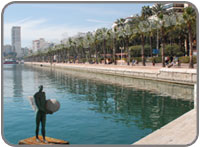
| The Explanada is the pride of Alicante. It's a very long and very wide walkway, lined with shady trees. It runs along the seafront of the city. Along here you will find some fine restaurants, fast food outlets and lots of places to sit in the shade. There's a stage where concerts are held and you will always find some kind of street entertainer or artesans selling their wares. From the Explanada, walk up the Rambla, one of the main shopping streets. |
|
| |
|
Getting around Alicante
Driving is calm in Alicante although quite difficult at times. Parking is very limited and the best option is often underground car parking. Cycles are popular in Alicante and there's a city cycle hire system. The best way to see Alicante however is by foot. Within the historical centre, everything is just a short walk and there are lots of places to rest. The city of Alicante appears to be very safe, even at night although care should always be taken in quiet streets. Local buses are everywhere and very frequent.
Most of the streets are disabled friendly and pedestrians definately rule. Start your visit on the Rambla Mendez Nunez where you will find the Tourist Office at number 23. There are 6 tourist offices in total in Alicante.
You can get to Alicante using the popular railway service - details and prices here |
|
|
Culture and fiestas of Alicante
Alicante
is a
cultural
centre and
has a
varied
selection
of events
and
fiestas.
At the end
of June a
traditional
arts and
crafts
market is
staged in
Plaza de
la
Santisima
Faz and
nearby
streets.
The event
has a
medieval
theme.
During
July and
August the
new
esplanade
in front
of the
port comes
alive for
the summer
festival
with
constant
theatrical
performances
and
concerts.
The fist
ten days
of
December
sees the
International
Puppet Festival that
attracts
people
from all
over the
world -
one of the
finest
events of
its kind
in the
world.
The Moors and Christians fiestas in Spain can vary drom small, town affairs through to huge city celebrations. You can see a sample fiesta here, with video. |
The casino in Alicante
|
|
|
|
|
Activities in the Alicante area
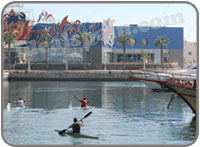
The coast of Alicante offers a wide range of sports and activities. Kayak Alicante offer kayak excursions and hire all along the Alicante coast. www.coastmaountainkayak.com. Aeroglobo offer balloon rides from their base near Catral. www.aeroglobo.com. You can explore the mountain roads with Mototours (www.mototours.com). They have tours on Vespa scooters and BMW motorbikes. When it comes to theme parks, Safari Aitana in Penaguila is a great day out. The safari is open every day from 11am. www.safariaitana.com.
Boat trip from Alicante to Tabarca - Cruceros Kon Tiki - Tel 965 216 396 - www.cruceroskontiki.com
|
|
|
 |
| National Police Alicante |
Emergencies 091 |
| Local Police Alicante |
965 107 200 - Emergencies 092 |
| Guardia Civil Alicante |
900 101 062 - Emergencies 062 |
| Fire Brigade Alicante |
965 982 222 - Emergencies 080 |
| General emergencies Alicante |
112 |
| General hospital Alicante |
965 938 300 |
| County Council Alicante |
965 121 300 |
| British Consulate in Alicante |
965 216 022 |
| German Consulate in Alicante |
965 217 060 |
Tourist information Alicante |
|
| Rambla Mendez Nunez, 23 |
965 200 000 |
| Expalnada de Espana, 1 |
965 147 038 |
| Campus san Vicente del Raspeig |
965 903 400 |
| C/Portugal, 17 |
965 929 802 |
| (RENFE), Av. Salamanca s/n |
965 125 633 |
| Playa de San Juan, A. Niza s/n |
Summer only |
| |
|
| Town Hall Alicante |
965 149 290 |
| Post Office Alicante |
965 219 984 |
| Red Cross Alicante |
965 252 525 |
| Customs Alicante |
965 207 646 |
| Port of Alicante |
965 130 095 |
| Coast Guard Alicante |
900 202 202 |
| Costa Blanca Samaritans |
|
| Hospital General de Alicante |
C/Pintor Baeza 965 938 300 |
| Hospital San Juan |
Ctra Alicante-Valencia 965 938 700 |
|
| |
 |
| Bus station Alicante |
965 130 700 |
| RENFE Train station Alicante |
968 502 214 |
| Alicante Airport information |
966 919 100 |
| Traffic Information Alicante |
965 125 466 |
| TAM Buses Alicante |
965 140 936 |
| Taxi in Alicante |
965 910 123 or 965 101 611 (www.teletaxialicante.com) |
| Alicante tram network (Trenet) |
900 720 472 |
| See train stops here |
|
| Low cost car hire in this part of Spain - Instant quotes, online booking and guaranteed reservations. Access to all the top car hire companies in Spain |
|
| |
 |
| SA Discoal (Nightclub) Alicante |
965 210 646 |
| Wilson's nightclub Alicante |
965 121 655 |
|
| |
|
Museo Arqueologico de Alicante
Pl. Doctor Gomez Ulla s/n
Tel: 965 149 000
www.marqalicante.com |
|
|
Where to go after Alicante
The Island of Tabarca
Located 11
miles
south of
Alicante
is a
guitar-shaped
island
with a
total area
of 30
hectares.
The Island
of Tabarca
has a
curious
history
and has a
firm place
in ancient
Greek
history.
It was
once a
refuge for
Berber
pirates
and in
1760, King
Carlos III
ordered a
fortress
to be
built
here. It
is
possible
to take a
boat ride
from
Alicante
to the
island.
From
Alicante,
take a
side step
to
Benidorm
with its
miles of
golden
beaches or
head south
to the
wonderful
port of
Santa Pola.
To the
north,
above Benidorm
you find
Calpe
and
Altea.
An
excursion
inland can
be made to
Busot to
see the
Cuevas del
Canelobre.
The caves
are 24km
from
Alicante
and house
the
highest
vaults in
the whole
of Spain.
The
interior
reminds
you of a
cathedral
interior
with its coloured
lights
illuminating
the rock
and
mineral
formations.
Busot also
offers the
visitor
many
hiking
routes
with
unique
views and
a range of
restaurants
with local
cuisine.
More caves
can be
found at
Vall d'Ebo,
some 30km
from
Denia. The
Cova del
Rull is
open from
10.30am
until 5pm
(8.30pm
April-September).
Tel 965
571 413.
Just over 50km away you will find a handful of towns that boast some of the most impressive castles in Spain. These include Novelda, Sax and Villena. |