|
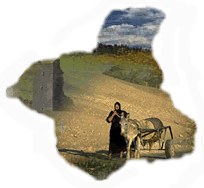
The region of
Murcia lies to
the south of
Valencia
and is thinly
populated
except in the
areas around
the rivers.
The mountains
reach right
down to the
sea.
During the
summer months
the weather
can be almost
unbearably hot
yet the
winters are
mild. The
province of
Murcia is
irrigated by
the Rivers
Segura, Murdo
and Sangonera
which makes
ideal
conditions for
the many
orchards of
citrus fruit.
In contrast
the area also
has expanses
of dry, arid
land where
olives and
vines thrive,
then turning
to desert-like
land covered
in cacti and
palms. |
|
|
|
|
Low cost car hire in Murcia - Instant quotes, online booking and guaranteed reservations. Access to all the top car hire companies in Spain
|
|
Worthy of a
visit are the
towns of
Alhama with a
splendid
castle, Mula
with a 15th
century castle
and
Lorca,
adorned with
historical
buildings and
a rich
history.
The province
has 170km of
coastline with
wonderful
beaches at La
Manga and
Aguilas. The
historical
city of
Cartagena
offers a large
naval base and
thriving
industrial
area. |
| |
|
 |
|
|
| |
|
The city of
Murcia
is described as one of the most beautiful and historic in the
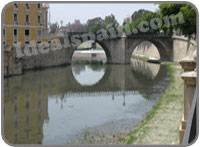
country. The city stands on the banks if the river and enjoys all
year round sunshine. It has the highest temperatures in the
region. There is a great deal of Moorish influence in the city,
not least of all the impressive city walls. After the reconquest,
the 20 mosques in the city were turned into churches. The
Cathedral is the most highly prized building in the city. The
first foundation stone was laid in 1388 by Bishop Pedrosa. It took
four centuries to complete. There are so many different styles and
cultures within, including 23 different chapels. |
 |
|
|
|
|
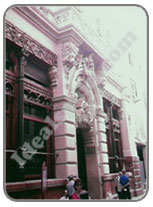
As you wander
through the city, there is a monumental building on every corner.
Many are in pristine condition and those that aren't are being
restored to their former glory. One building worthy of a mention
is the casino (pictured below). Here in the 19th century, worthy
citizens would sit to be admired like fish in a goldfish bowl. The
palatial interior is quite amazing. |
|
|
 |
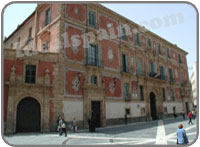
Among the
other splendid buildings to see is the
Bishop's
Palace
located near the Cathedral. Dated 1748 it has two wonderful
facades. The
Convent
Church of Santa Ana
is 18th century and is the third church to be built on this site,
the original being1490. Here you can try the freshly baked cakes,
made by the nuns and served through a revolving hatch. The
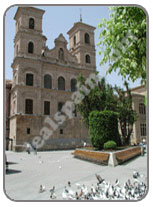
Church of
San Miguel
stands on the site of an earlier church. The 18th century church
has wonderful coloured altarpieces. The
Almudi
dates from
1602 and was formerly the storage place for public corn collected
as tithes. It was reconditioned in 1985 and now houses the art
centre and city archives.
|
|
In all, Murcia
has everything to offer the visitor and you can almost certainly
guarantee that no matter what time of year you visit, you will be
wrapped up in some kind of fiesta or celebration. You will find
the people pleasant and friendly towards tourists.
|
 |
|
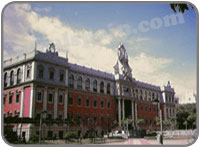
One must
remember that
Murcia is a
university
city and as
such has a
large number
of students in
the city. The
university
building is of
huge
proportions
and demands
time to
examine
closely its
exterior (see
right) . The
area around
the university
has a wealth
of lively bars
and
restaurants
that are truly
vibrant with
life.
We visited
Murcia at the
end of our
2000 Costa
Blanca tour
after calling
at
Elche
and
Lorca.
We found
Murcia to be
one of the
most beautiful
cities we had
ever seen. So
much so that
we returned in
May 2002 to
take a better
look at the
city and
increase our
photograph
library. |
 |
|
|
 |
Local crafts
include weaving and embroidery. Some of the beautiful hand-made
items take up to two weeks each to produce. (see photo left) |
|
| |
|
|