|
|
Places in Spain -
Tenerife, in the Canary Islands, Spain (The Canaries)
|
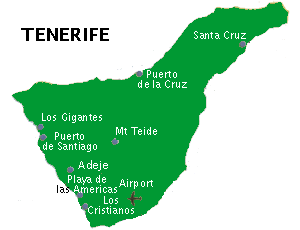
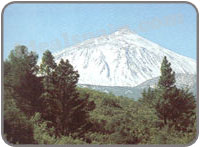
Drenched in sunshine all year round, Tenerife may be closer to Africa than Spain but the atmosphere is definitely Spanish. Long, relaxing days, soaking up the sun and long nights with a pulsating nightlife. Tenerife is the largest of the Canary Islands. Tenerife means snow or white mountain for its dominating feature is Mount Teide, a snow covered mountain at 3,716m height.
|
|
|
| |
|
|
During
the
Spanish
conquest,
the
island
was
divided
up
into
nine
distinct
menceyatos,
and
each
developed
its
own
architecture
and
culture.
Although
the
island
is
now
united,
its
broken
landscape
is
indicative
of
its
diverse
flora;
the
northern
half
of
the
island
is
a
verdant
and
hilly
garden,
laced
with
undiscovered,
tranquil
beaches,
while
the
south
is
an
arid
and
endless
black
sand
beach,
crowded
with
development.
Tenerife’s
interior
offers
the
Canaries’
greatest
hiking,
a
welcome
escape
from
sun
scorched
beaches.
For
those
who
long
for
still
more
seclusion,
Santa
Cruz
and
Los
Cristianos
provide
transportation
to
the
westernmost
islands
of
El
Hierro,
La
Palma,
and
La
Gomera,
not
yet
plundered
by
the
tourism
industry.
Beaches
in
Tenerife
are
black
by
nature
due
to
the
volcanic
element
of
the
island,
however
there
are
several
golden
beaches
consisting
of
imported
sand
from
the
Sahara
Desert.
Warm,
clear
seas
are
excellent
for
water
sports
and
swimming.
The
nightlife
buzzes
once
the
sun
goes
down
and
the
bars
and
restaurants
come
alive.
The
clubs
go
on
most
of
the
night
especially
in
the
Playa
de
Las
Americas
area.
Inland
Tenerife
is
dramatically
different
with
tiny,
hillside
villages
and
volcanic
landscape,
banana
plantations
and
pine
forests.
Visit
Mount
Teide,
Spain's
highest
mountain
and
one
of
the
world's
largest
volcanic
craters.
With
such
a
variety
of
treats
on
offer,
Tenerife
will
always
continue
to
be
a
tourist
trap,
attracting
thousands
of
visitors
every
year.
The
airport,
Reina
Sofia
is
located
at
the
south
of
the
island.
Resorts
in
Tenerife
include:
Playa
de
Las
Americas,
best
described
as
a
modern
playground
with
an
international
atmosphere.
A
pulsating
night
life
with
numerous
clubs
and
discos.
The
best
place
to
be
at
night
is
Veronica's
Strip
where
you
will
have
difficulty
deciding
which
club
to
go
in.
About
1
hour
30
minutes
from
the
airport.
The
white
sand
on
the
man
made
Playa
de
Las
Americas
is
the
first
clue
of
what
awaits
a
visitor
to
Tenerife’s
main
southern
attractions.
The
sand
here
was
brought
in
from
the
Sahara
desert
to
complement
the
nearby
grey
sand
of
the
Los
Cristianos
beach.
|
|
|
Developed into
fully fledged
resorts in the
1960s and 70s,
these two
adjacent towns
probably have
more hotels
than local
residents.
Their beaches
are hardly the
equals of
Fuerteventura’s,
but Las
Americas and
Los Cristianos
can serve as a
base for
exploring
other shores
in the south,
including
Playa del
Medano, one of
Tenerife’s
best and a
wind surfing
hot-spot. Most
importantly,
ferries to La
Gomera depart
from Los
Cristianos.
Los Cristianos
offers a more
sophisticated
resort with
sandy beaches
protected by a
jetty which
makes it
popular with
families. Not
a resort for
the clubbers
but offers a
relaxed
atmosphere day
and night. |
 |
|
|
|
Playa Paraiso,
a secluded and
relaxed resort
where most
holidays are
hotel based
with built-in
entertainment.
A small,
shingle beach
with a few
bars and
restaurants
but only a
taxi ride away
from the
nightlife in
Las Americas
if you want
it. This
resort is
ideal for
those who just
want to switch
off from
everything.
Puerto de la
Cruz,
the most
popular resort
in the north,
just 35km from
Santa Cruz.
Although the
resort is
short on
beaches it
offers
everything
else that the
holiday maker
may require.
It was
originally a
small fishing
village but
now boasts
bars,
restaurants,
shops and a
casino. You
will find the
naval museum
here as well
as several
good art
museums. The
main promenade
Avenida de
Colon leads
off to a maze
of
side-streets,
lined with
shops selling
the local
liquor,
jewellery and
lace. The
Church of the
Rock of France
is worthy of a
mention,
completed in
the 17th
century and a
few streets
away, the
Plaza Charco,
the town's
traditional
main square is
always a
buzzing focal
point. The old
part of the
town remains
virtually
unchanged and
here you will
find narrow,
winding
streets lined
with old
houses.
Santa Cruz
In the north.
The capital of
the island.
Here you will
find the
archaeological
museum with a
wonderful
collection of
artefacts
including
mummies found
in the caves.
Tel 24 20 90.
You will also
find the fine
arts museum
here with a
fine
collection of
works from the
world's famous
artists. Tel
24 43 58.
Wherever you
go in Santa
Cruz you will
see a monument
or church.
El
Teide National
Park
Towering 3718m
over Tenerife,
Spain’s
highest peak
presides over
a vast,
unspoiled
wilderness. El
Teide itself
forms the
northern ridge
of a much
larger volcano
that erupted
millions of
years ago; the
remaining 17km
wide crater,
the Caldera,
only hints at
the size of
the explosion.
Once gracing
the Spanish
1000ptas note,
the Spanish
park service
to say that
the peak
allows us to
ponder “our
miserly
insignificance.”
El Teide
shadows
peaceful
fields of the
most vibrant
wild flower
fields on
earth. Though
dormant, the
area’s
volcanic
activity has
not yet
ceased. In
1798, during
the last major
eruption, lava
seeped down
the slopes of
Pico Viejo
(3102m),
creating a
stunning, 800m
crater. Las
Canadas,
comprised of
collapsed
craters, is
another
extraterrestrial
product of the
sinking
progress.
Among the 400
species that
inhabit the
diverse
terrain, watch
out for the
large Lagarto
Tizon, a
stone-camouflaged
lizard,
lurking in the
park. |
|
| |
|
|
|
|