Manacor is lively, restless, accessible, rapidly growing, a great centre for sport activities, shopping, industry and culture, including art and is a commercial and industrial town and regional capital. The town of Manacor is situated in a hollow which experiences the freezing fogs of winter and the burning heat of the summer.
Manacor is surrounded by a diversity of landscapes and a countryside where large manor houses with defence towers dominate the horizon, former refuges for those fleeing Burber pirate attacks. Today several of such towers have been converted into establishments catering for agricultural and rural tourism.
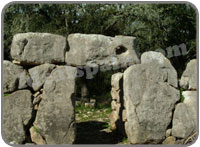
Manacor offers a wealth of historical remains including important prehistoric sites from the Talaiotic era ( 1.200 to 900 BC ) such as the megalithic remains of S'Illot Son Vaquer, Son Ribot or the site of S'Hospitalet Vell, a Talaiotic village which due to its size and monumental value is one of the most important on the island and also one of the most enigmatic.
There are the remains of Son Pereto, a former chapel, on the Manacor to Sant Llorenc, road where the treasures of this tiny church are gradually being unearthed including the beautiful mosaics and a large number of other archaeological remains providing evidence and a reminder of the ancient Christian colony. These treasures can be viewed in Manacor's Municipal Archaeological Museum, situated in the Tower of the Enagistes ( Manacor to Calas de Mallorca road ).
Other interesting historical sites include the remains of the Paleo-Christian church of Sa Carrotja and the communication and defence tower " Torre des Falcons" in Porto Cristo; the humble remains of the Manacor Royal Palace"Torre del Palau" former dwelling of King James II; the neo-Gothic building of the church of Sorrows in Manacor, whose bell tower, known as the Rubi tower is the highest building in the town, but the architectural jewel is without doubt the cloister of Saint Vicente Ferrer, one of the few cloisters in the country forming a twin gallery and which was declared a National Monument in 1919. Today, with the help of grants, it is being restored by a team of architects and surveyors.
Advertise With
Us
Put
your company
in front of
nearly half a
million
people, every
month
Manacor has recently experienced a massive boom in tourism and the nearby beaches are well attended in the summer. The recent boom has encouraged an increase in the number of hotels, restaurants and tourist attractions. It has also enabled the area to become more organised. Most of Manacor's beaches have been awarded the Blue Flag for safety and facilities.
The pearls of Manacor and Mallorca
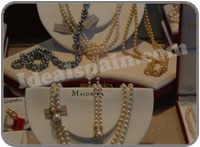
Manacor is known to be the centre of Mallorca's pearl industry and within Manacor you will find several large factories that allow visits. Each factory gives a tour whereby you can watch the whole process of pearl manufacture. At the end you have the chance to see the showroom and purchase items of jewellery made on the premises. We made such a vist in January 2003 and found the visit to be very informative, free of charge and well worth the effort. You can either take a coach trip to a factory or make your own way there.
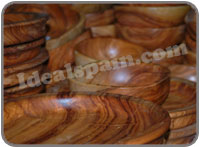
Another industry for which Manacor is famous, and indeed Mallorca in general, is olive wood. There is a good factory on the entrance road to Manacor that allows visits. You can visit the showroom and see thousands of items hand crafted from olive wood. You will also see some of the antique machinery once used in the factory. The visit is free and prices are reasonable for the olive wood items. You will see everything from coffee tables to coasters, dominos and pens.
Low cost car hire in Mallorca - Instant quotes, online booking and guaranteed reservations. Access to all the top car hire companies in Spain