|
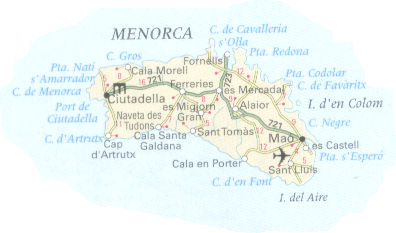
Fornells
is
an
attractive
fishing
village
on
the
north
of
the
island
at
the
mouth
of
a
spectacular
bay.
It
is
ideal
for
windsurfing
and
water
sports.
4km
away
is
the
exclusive
resort
of
Playa
de
Fornells
and
close
by
is
a
superb
beach
by
the
name
of
Cala
Tirant.
Cala
Galdana
is
one
of
the
most
popular
spots
in
Menorca,
set
in
a
horseshoe
bay.
Santo
Tomas
is
a
small
resort
with
a
long
stretch
of
golden
sands
ideal
for
families
and
couples
looking
for
quiet,
quality
accommodation.
Son
Bou
has
one
of
the
longest
sandy
beaches
on
the
island,
backing
on
to
open
countryside,
which
at
present
has
not
been
spoilt
by
development.
There
are
shops,
bars,
restaurants
and
a
discotheque.
Binebeca
and
Binisafua
on
the
southwest
coast
are
Menorca's
first
holiday
resorts,
pretty,
mainly
residential
areas
of
privately
owned
villas
with
numerous
sandy
bays
to
enjoy.
Minorca,
for
almost
100
years
was
under
British
rule.
It
was
ceded
to
Spain
in
1802.
There
is
still
a
strong
British
influence
on
the
island.
In
general
the
nightlife
on
the
island
is
pretty
much
low-key
with
few
discos
and
clubs.
Warm
evenings
are
more
often
spent
in
the
street
cafes
and
bars.
The
local
menu
is
predominantly
seafood
or
cheese
based
especially
in
Fornells
where
lobster
is
of
the
highest
quality.
Mahon
is
where
mayonnaise
originated.
Minorca
has
the
greatest
concentration
of
discovered
pre-historic
and
bronze-age
settlements
in
the
world
and
at
only
30
miles
by
12
miles
it
has
been
a
favoured
site
for
many
nations
including
Romans,
Arabs,
Turks
and
Greeks.
The
Romans
gave
the
island
its
present
name
which
means
'little
one'
in
contrast
to
Majorca
which
means
'large
one'.
The
island
is
covered
with
evidence
of
settlements
and
the
burial
grounds
dating
from
1500BC
are
well
worth
a
visit.
There
are
about
45
burial
grounds,
some
of
which
are
accessible.
|