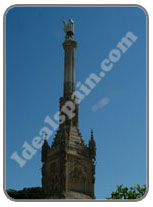
There are more than 200 churches in Madrid and it has its own cathedral. The Catedral de San Isidro is located in Calle de Toledo and has a massive dome. It needed major rebuilding after the Civil War. Close by you will find the Capilla del Obispo dating from 1520, an outstanding church. San Andres Church is located behind it.
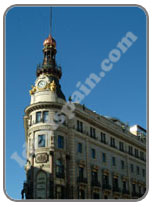
The financial area of Madrid houses the head offices of more than 100 banks.
The Plaza del Callao is the centre for department stores and cinemas yet just a couple of streets away you will find a 16th century convent.
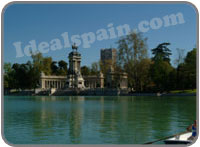
In the Plaza de España you will find the statue of Cervantes set amid trees, gardens and fountains. Several important streets lead from here, each with their own famous buildings and museums.
Markets and shopping
Sunday in Madrid is just as vibrant and exciting as any other day. It is a great time to explore one of the popular markets. On the streets of old Madrid, the Rastro is one of the world's largest flea markets. It begins near the Cathedral. The Plaza Mayor plays host to the stamp Fair where hundreds of collectors converge every Sunday to deal in stamps, coins, banknotes and anything else vaguely collectable. Close to the Botanical gardens is the weekly Book Fair where new and used books can be found by the thousand.
Whatever you want to buy in Spain you are sure to find it in Madrid. You will find the ceramics and leather extremely good value as well as the fine linen and needlework. Artisan shops happily trade alongside major department stores and world famous brand names.

Things to do in Madrid
Bullfights
If you have never seen a bullfight then Madrid is the place to see one. It is known to be the very home of bullfighting. Once you have been you may be so disgusted or shocked that you never want to go again, or you may enjoy it so much you long to see another. Whichever, the fights in Madrid are among the best in Spain with the top matadors competing. Madrid's largest bullring seats over 32,000 people. March to October.
Nightlife
Spain's second most famous tradition is the art of Flamenco and in Madrid you will not be short of venues in which to sample the delights of this centuries old dance. Many say that Madrid is not the best place to see true flamenco but you will certainly enjoy the night out.
The residents of Madrid come alive at night and you will find hundreds of cinemas, theatres and nightclubs as well as the many smaller, lesser known tapas bars. You will find every musical taste catered for as well as a thriving gay community. Travel companies in Madrid offer special night trips, taking in a couple of professional floorshows. This may be the best and safest way of getting a taste of Madrid's nightlife. Madrid has two symphony orchestras that produce regular performances and there are regular ballets and operas.
There is a place with a world music concert every Saturday, it is Colonial Norte. You have also flamenco (real flamenco, not flamenco for tourists) every Thursday and jazz every Friday. For further information: http://colonial.mundimapa.com
Fiestas
If you happen to be in Madrid during a fiesta, you are at a distinct advantage. You will be rewarded with an explosion of sound and colour. The largest celebration is that of Holy Week at Easter where the fiesta is unforgettable. In May Madrid honours San Isidore, the capital's patron saint. Half a month of parties, contests, concerts, plays and daily bullfights. Check with the tourist board for a full list of activities and smaller, regional fiestas.
Sports
You name a sport and you will find it in Madrid. There is a handful of golf courses, football grounds, swimming pools and athletic tracks. Indoor sports are well catered for too with stadiums, halls and bowling alleys. Dog racing is held at the dog track, car racing is held at the Jarama circuit, 26km north of Madrid and horse racing is to be found at the Hippodrome, 7km from central Madrid. |